Fair Use Notice

FAIR USE NOTICE

OCCUPY THE COMMONS


This site may contain copyrighted material the use of which has not always been specifically authorized by the copyright owner. We are making such material available in an effort to advance understanding of environmental, political, human rights, economic, democracy, scientific, and social justice issues, etc. we believe this constitutes a ‘fair use’ of any such copyrighted material as provided for in section 107 of the US Copyright Law.

In accordance with Title 17 U.S.C. Section 107, the material on this site is distributed without profit to those who have expressed a prior interest in receiving the included information for research and educational purposes. For more information go to: http://www.law.cornell.edu/uscode/17/107.shtml

If you wish to use copyrighted material from this site for purposes of your own that go beyond ‘fair use’, you must obtain permission from the copyright owner.

FAIR USE NOTICE FAIR USE NOTICE: This page may contain copyrighted material the use of which has not been specifically authorized by the copyright owner. This website distributes this material without profit to those who have expressed a prior interest in receiving the included information for scientific, research and educational purposes. We believe this constitutes a fair use of any such copyrighted material as provided for in 17 U.S.C § 107.

Read more at: http://www.etupdates.com/fair-use-notice/#.UpzWQRL3l5M | ET. Updates
FAIR USE NOTICE FAIR USE NOTICE: This page may contain copyrighted material the use of which has not been specifically authorized by the copyright owner. This website distributes this material without profit to those who have expressed a prior interest in receiving the included information for scientific, research and educational purposes. We believe this constitutes a fair use of any such copyrighted material as provided for in 17 U.S.C § 107.

Read more at: http://www.etupdates.com/fair-use-notice/#.UpzWQRL3l5M | ET. Updates

All Blogs licensed under Creative Commons Attribution 3.0


Thursday, March 19, 2015

The New (Deplorable) American Order


Home


Published on
by

The New (Deplorable) American Order


1% Elections, The Privatization of the State, a Fourth Branch of Government, and the Demobilization of "We the People"


'Don’t for a second think,' writes Engelhardt, 'that the American political system isn’t being rewritten on the run by interested parties in Congress, our present crop of billionaires, corporate interests, lobbyists, the Pentagon, and the officials of the national security state.'

Have you ever undertaken some task you felt less than qualified for, but knew that someone needed to do? Consider this piece my version of that, and let me put what I do understand about it in a nutshell: based on developments in our post-9/11 world, we could be watching the birth of a new American political system and way of governing for which, as yet, we have no name.

And here’s what I find strange: the evidence of this, however inchoate, is all around us and yet it’s as if we can’t bear to take it in or make sense of it or even say that it might be so.

Let me make my case, however minimally, based on five areas in which at least the faint outlines of that new system seem to be emerging: political campaigns and elections; the privatization of Washington through the marriage of the corporation and the state; the de-legitimization of our traditional system of governance; the empowerment of the national security state as an untouchable fourth branch of government; and the demobilization of "we the people."

Whatever this may add up to, it seems to be based, at least in part, on the increasing concentration of wealth and power in a new plutocratic class and in that ever-expanding national security state. Certainly, something out of the ordinary is underway, and yet its birth pangs, while widely reported, are generally categorized as aspects of an exceedingly familiar American system somewhat in disarray.

1. 1% Elections

Check out the news about the 2016 presidential election and you’ll quickly feel a sense of been-there, done-that. As a start, the two names most associated with it, Bush and Clinton, couldn’t be more familiar, highlighting as they do the curiously dynastic quality of recent presidential contests.  (If a Bush or Clinton should win in 2016 and again in 2020, a member of one of those families will have controlled the presidency for 28 of the last 36years.)

Take, for instance, “Why 2016 Is Likely to Become a Close Race,” a recent piece Nate Cohn wrote for my hometown paper.  A noted election statistician, Cohn points out that, despite Hillary Clinton’s historically staggering lead in Democratic primary polls (and lack of serious challengers), she could lose the general election.  He bases this on what we know about her polling popularity from the Monica Lewinsky moment of the 1990s to the present.  Cohn assures readers that Hillary will not “be a Democratic Eisenhower, a popular, senior statesperson who cruises to an easy victory.”  It’s the sort of comparison that offers a certain implicit reassurance about the near future.  (No, Virginia, we haven’t left the world of politics in which former general and president Dwight D. Eisenhower can still be a touchstone.)

Cohn may be right when it comes to Hillary’s electability, but this is not Dwight D. Eisenhower’s or even Al Gore’s America. If you want a measure of that, consider this year’s primaries. I mean, of course, the 2015 ones. Once upon a time, the campaign season started with candidates flocking to Iowa and New Hampshire early in the election year to establish their bona fides among party voters. These days, however, those are already late primaries.

The early primaries, the ones that count, take place among a small group of millionaires and billionaires, a new caste flush with cash who will personally, or through complex networks of funders, pour multi-millions of dollars into the campaigns of candidates of their choice.  So the early primaries -- this year mainly a Republican affair -- are taking place in resort spots like Las Vegas, Rancho Mirage, California, and Sea Island, Georgia, as has been widely reported. These “contests” involve groveling politicians appearing at the beck and call of the rich and powerful, and so reflect our new 1% electoral system. (The main pro-Hillary super PAC, for instance, is aiming for a kitty of $500 million heading into 2016, while the Koch brothers network has already promised to drop almost $1 billion into the coming campaign season, doubling their efforts in the last presidential election year.)

Ever since the Supreme Court opened up the ultimate floodgates with its 2010 Citizens United decision, each subsequent election has seen record-breaking amounts of money donated and spent. The 2012 presidential campaign was the first $2 billion election; campaign 2016 is expected to hit the $5 billion mark without breaking a sweat.  By comparison, according to Burton Abrams and Russell Settle in their study, “The Effect of Broadcasting on Political Campaign Spending,” Republicans and Democrats spent just under $13 million combined in 1956 when Eisenhower won his second term.

In the meantime, it’s still true that the 2016 primaries will involve actual voters, as will the election that follows. The previous election season, the midterms of 2014, cost almost $4 billion, a record despite the number of small donors continuing to drop. It also represented the lowest midterm voter turnout since World War II. (See: demobilization of the public, below -- and add in the demobilization of the Democrats as a real party, the breaking of organized labor, the fragmenting of the Republican Party, and the return of voter suppression laws visibly meant to limit the franchise.) It hardly matters just what the flood of new money does in such elections, when you can feel the weight of inequality bearing down on the whole process in a way that is pushing us somewhere new.

2. The Privatization of the State (or the U.S. as a Prospective Third-World Nation)

In the recent coverage of the Hillary Clinton email flap, you can find endless references to the Clintons of yore in wink-wink, you-know-how-they-are-style reporting; and yes, she did delete a lot of emails; and yes, it’s an election year coming and, as everyone points out, the Republicans are going to do their best to keep the email issue alive until hell freezes over, etc., etc.  Again, the coverage, while eyeball gluing, is in a you’ve-seen-it-all-before, you’ll-see-it-all-again-mode.

However, you haven’t seen it all before. The most striking aspect of this little brouhaha lies in what’s most obvious but least highlighted.  An American secretary of state chose to set up her own private, safeguarded email system for doing government work; that is, she chose to privatize her communications.  If this were Cairo, it might not warrant a second thought.  But it didn’t happen in some third-world state.  It was the act of a key official of the planet’s reigning (or thrashing) superpower, which -- even if it wasn’t the first time such a thing had ever occurred -- should be taken as a tiny symptom of something that couldn’t be larger or, in the long stretch of history, newer: the ongoing privatization of the American state, or at least the national security part of it.

Though the marriage of the state and the corporation has a pre-history, the full-scale arrival of the warrior corporation only occurred after 9/11.  Someday, that will undoubtedly be seen as a seminal moment in the formation of whatever may be coming in this country.  Only 13 years later, there is no part of the war state that has not experienced major forms of privatization.  The U.S. military could no longer go to war without its crony corporationsdoing KP and guard duty, delivering the mail, building the bases, and being involved in just about all of its activities, including training the militaries of foreign allies and even fighting.  Such warrior corporations are now involved in every aspect of the national security state, including torturedrone strikes, and -- to the tune of hundreds of thousandsof contract employees like Edward Snowden -- intelligence gathering and spying.  You name it and, in these years, it’s been at least partly privatized.

All you have to do is read reporter James Risen’s recent book, Pay Any Price, on how the global war on terror was fought in Washington, and you know that privatization has brought something else with it: corruption, scams, and the gaming of the system for profits of a sort that might normally be associated with a typical third-world kleptocracy.  And all of this, a new world being born, was reflected in a tiny way in Hillary Clinton’s very personal decision about her emails.

Though it’s a subject I know so much less about, this kind of privatization (and the corruption that goes with it) is undoubtedly underway in the non-war-making, non-security-projecting part of the American state as well.

3. The De-legitimization of Congress and the Presidency

On a third front, American “confidence” in the three classic check-and-balance branches of government, as measured by polling outfits, continues to fall.  In 2014, Americansexpressing a “great deal of confidence” in the Supreme Court hit a new low of 23%; in the presidency, it was 11%, and in Congress a bottom-scraping 5%.  (The military, on the other hand, registers at 50%.)  The figures for “hardly any confidence at all” are respectively 20%, 44%, and more than 50%.  All are in or near record-breaking territory for the last four decades.

It seems fair to say that in recent years Congress has been engaged in a process of delegitimizing itself.  Where that body once had the genuine power to declare war, for example, it is now “debating” in a desultory fashion an “authorization” for a war against the Islamic State in Syria, Iraq, and possibly elsewhere that has already been underway for eight months and whose course, it seems, will be essentially unaltered, whether Congress authorizes it or not.

What would President Harry Truman, who once famously ran a presidential campaign against a “do-nothing” Congress, have to say about a body that truly can do just about nothing?  Or rather, to give the Republican war hawks in that new Congress their due, not quite nothing.  They are proving capable of acting effectively to delegitimize the presidency as well.  House Majority Leader John Boehner’s invitation to Israeli Prime Minister Benjamin Netanyahu to undercut the president's Iranian nuclear negotiations and the letter signed by 47 Republican senators and directed to the Iranian ayatollahs are striking examples of this.  They are visibly meant to tear down an “imperial presidency” that Republicans gloried in not so long ago.

The radical nature of that letter, not as an act of state but of its de-legitimization, was noted even in Iran, where fundamentalist Supreme Leader Ali Khamenei proclaimed it “a sign of a decline in political ethics and the destruction of the American establishment from within.” Here, however, the letter is either being covered as a singularly extreme one-off act (“treason!”) or, as Jon Stewart did on “The Daily Show,” as part of a repetitive tit-for-tat between Democrats and Republicans over who controls foreign policy.  It is, in fact, neither.  It represents part of a growing pattern in which Congress becomes an ever less effective body, except in its willingness to take on and potentially take out the presidency.

In the twenty-first century, all that “small government” Republicans and “big government” Democrats can agree on is offering essentially unconditional support to the military and the national security state.  The Republican Party -- its various factions increasingly at each other’s throats almost as often as at those of the Democrats -- seems reasonably united solely on issues of war-making and security.  As for the Democrats, an unpopular administration, facing constant attack by those who loath President Obama, has kept its footing in part by allying with and fusing with the national security state.  A president who came into office rejecting torture and promoting sunshine and transparency in government has, in the course of six-plus years, come to identify himself almost totally with the U.S. military, the CIA, the NSA, and the like.  While it has launched an unprecedented campaignagainst whistleblowers and leakers (as well as sunshine and transparency), the Obama White House has proved a powerful enabler of, but also remarkably dependent upon, that state-within-a-state, a strange fate for “the imperial presidency.” 

4. The Rise of the National Security State as the Fourth Branch of Government

One “branch” of government is, however, visibly on the rise and rapidly gaining independence from just about any kind of oversight.  Its ability to enact its wishes with almost no opposition in Washington is a striking feature of our moment.  But while the symptoms of this process are regularly reported, the overall phenomenon -- the creation of a de facto fourth branch of government -- gets remarkably little attention.  In the war on terror era, the national security state has come into its own.  Its growth has been phenomenal.  Though it’s seldom pointed out, it should be considered remarkable that in this period we gained a second full-scale “defense department,” the Department of Homeland Security, and that it and the Pentagon have become even more entrenched, each surrounded by its own growing “complex” of private corporations, lobbyists, and allied politicians.  The militarization of the country has, in these years, proceeded apace. 

Meanwhile, the duplication to be found in the U.S. Intelligence Community with its 17 major agencies and outfits is staggering.  Its growing ability to surveil and spy on a global scale, including on its own citizens, puts the totalitarian states of the twentieth century to shame.  That the various parts of the national security state can act in just about any fashion without fear of accountability in a court of law is by now too obvious to belabor.  As wealth has traveled upwards in American society in ways not seen since the first Gilded Age, so taxpayer dollars have migrated into the national security state in an almost plutocratic fashion.

New reports regularly surface about the further activities of parts of that state.  In recent weeks, for instance, we learned from Jeremy Scahill and Josh Begley of the Intercept that the CIA has spent years trying to break the encryption on Apple iPhones and iPads; it has, that is, been aggressively seeking to attack an all-American corporation (even if significant parts of its production process are actually in China).  Meanwhile, Devlin Barrett of theWall Street Journal reported that the CIA, an agency barred from domestic spying operations of any sort, has been helping the U.S. Marshals Service (part of the Justice Department) create an airborne digital dragnet on American cell phones.  Planes flying out of five U.S. cities carry a form of technology that "mimics a cellphone tower." This technology, developed and tested in distant American war zones and now brought to "the homeland," is just part of the ongoing militarization of the country from its borders to itspolice forces.  And there’s hardly been a week since Edward Snowden first released crucial NSA documents in June 2013 when such “advances” haven’t been in the news.

News also regularly bubbles up about the further expansion, reorganization, and upgrading of parts of the intelligence world, the sorts of reports that have become the barely noticed background hum of our lives.  Recently, for instance, Director John Brennan announced a major reorganization of the CIA meant to break down the classic separation between spies and analysts at the Agency, while creating a new Directorate of Digital Innovation responsible for, among other things, cyberwarfare and cyberespionage.  At about the same time, according to the New York Times, the Center for Strategic Counterterrorism Communications, an obscure State Department agency, was given a new and expansive role in coordinating “all the existing attempts at countermessaging [against online propaganda by terror outfits like the Islamic State] by much larger federal departments, including the Pentagon, Homeland Security and intelligence agencies.”

This sort of thing is par for the course in an era in which the national security state has only grown stronger, endlessly elaborating, duplicating, and overlapping the various parts of its increasingly labyrinthine structure.  And keep in mind that, in a structure that hasfought hard to keep what it's doing cloaked in secrecy, there is so much more that we don’t know.  Still, we should know enough to realize that this ongoing process reflects something new in our American world (even if no one cares to notice).

5. The Demobilization of the American People

In The Age of Acquiescence, a new book about America’s two Gilded Ages, Steve Fraser asks why it was that, in the nineteenth century, another period of plutocratic excesses, concentration of wealth and inequality, buying of politicians, and attempts to demobilize the public, Americans took to the streets with such determination and in remarkable numbers over long periods of time to protest their treatment, and stayed there even when the brute power of the state was called out against them.  In our own moment, Fraser wonders, why has the silence of the public in the face of similar developments been so striking?

After all, a grim new American system is arising before our eyes.  Everything we once learned in the civics textbooks of our childhoods about how our government works now seems askew, while the growth of poverty, the flatlining of wages, the rise of the .01%, the collapse of labor, and the militarization of society are all evident.

The process of demobilizing the public certainly began with the military.  It was initially a response to the disruptive and rebellious draftees of the Vietnam-era.  In 1973, at the stroke of a presidential pen, the citizen’s army was declared no more, the raising of new recruits was turned over to advertising agencies (a preview of the privatization of the state to come), and the public was sent home, never again to meddle in military affairs.  Since 2001, that form of demobilization has been etched in stone and transformed into a way of life in the name of the “safety” and “security” of the public.

Since then, “we the people” have made ourselves felt in only three disparate ways: from the left in the Occupy movement, which, with its slogans about the 1% and the 99%, put the issue of growing economic inequality on the map of American consciousness; from the right, in the Tea Party movement, a complex expression of discontent backed and at leastpartially funded by right-wing operatives and billionaires, and aimed at the de-legitimization of the “nanny state”; and the recent round of post-Ferguson protests spurred at least in part by the militarization of the police in black and brown communities around the country.

The Birth of a New System

Otherwise, a moment of increasing extremity has also been a moment of -- to use Fraser’s word -- “acquiescence.”  Someday, we’ll assumedly understand far better how this all came to be.  In the meantime, let me be as clear as I can be about something that seems murky indeed: this period doesn’t represent a version, no matter how perverse or extreme, of politics as usual; nor is the 2016 campaign an election as usual; nor are we experiencing Washington as usual.  Put together our 1% elections, the privatization of our government, the de-legitimization of Congress and the presidency, as well as the empowerment of the national security state and the U.S. military, and add in the demobilization of the American public (in the name of protecting us from terrorism), and you have something like a new ballgame.

While significant planning has been involved in all of this, there may be no ruling pattern or design.  Much of it may be happening in a purely seat-of-the-pants fashion.  In response, there has been no urge to officially declare that something new is afoot, let alone convene a new constitutional convention.  Still, don’t for a second think that the American political system isn’t being rewritten on the run by interested parties in Congress, our present crop of billionaires, corporate interests, lobbyists, the Pentagon, and the officials of the national security state.

Out of the chaos of this prolonged moment and inside the shell of the old system, a new culture, a new kind of politics, a new kind of governance is being born right before our eyes. Call it what you want. But call it something. Stop pretending it’s not happening.
shadowgovengelhardt.jpgTom Engelhardt, co-founder of the American Empire Project, runs the Nation Institute's TomDispatch.com. His latest book is, Shadow Government: Surveillance, Secret Wars, and a Global Security State in a Single-Superpower World (with an introduction by Glenn Greenwald). Previous books include Terminator Planet: The First History of Drone Warfare, 2001-2050 (co-authored with Nick Turse), The United States of FearThe American Way of War: How Bush's Wars Became Obama'sThe End of Victory Culture: a History of the Cold War and Beyond, as well as of a novel, The Last Days of Publishing To stay on top of important articles like these, sign up to receive the latest updates from TomDispatch.com here.

Saturday, November 29, 2014

11 Stupid Reasons That White People Have Rioted


White people riot all the time. Here's a look at some of the dumbest reasons.


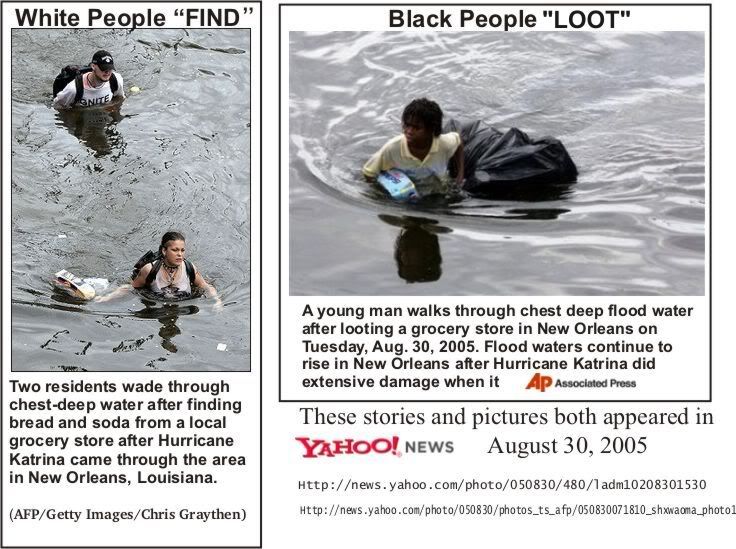
There is a long and storied history of behaviors being depicted through the prism of people's skin color. During Hurricane Katrina, as people of all races desperately searched for provisions, the media reported that white people “found” food, while black people “looted.” 

A similar phenomenon can be seen in the response to protests sparked by the murder of unarmed black teenager Michael Brown and a grand jury’s recent decision not to indict his killer, Ferguson police officer Darren Wilson. In discussing riots that occurred in the aftermath of both events, the media and conservative pundits have displayed far too great a willingness to chalk up the destruction to black pathology without looking at longstanding policies that support and maintain white supremacy in the U.S. What’s more, they also completely overlook the fact that white people riot, too—just for really stupid reasons.

Inspired by a list compiled by political blogger @red3blog in a series of tweets, here’s a more in-depth look at the 11 most ridiculous reasons white people have rioted.

11) Denver 1998: Denver Broncos Win Super Bowl.

In response to their home team, the Denver Broncos, winning the Super Bowl for the second consecutive year in a row, 10,000 fans apparently decided the most appropriate response was to go on a rampage that included fighting in the street, randomly setting bonfires, overturning cars and general acts of vandalism. Andrew Hudson, a spokesman for the mayor’s office, later called the mob destruction “a really ugly scene by a lot of obnoxious people who were drunk.” Video of the swelling crowd behaving badly can be viewed here, with reporters repeatedly referring to the rioters, who caused the city millions of dollars in damages, as “rowdy.”


10) San Francisco 2012. San Francisco Giants Win World Series.
You might guess that with three World Series wins over the last five years, riot-ready San Francisco Giants fans might decide to sit one of those wins out, but so far, that hasn’t happened. While this particular photo dates to the 2012 riots following the Giants’ triumph over the Detroit Tigers, the city has erupted in post-World Series violence twice more in recent history: in 2010, after the Giants beat the Texas Rangers, and again this year, after the team defeated the Kansas City Royals. The 2014 riots ended with two non-fatal shootings and a stabbing among the violence that marred the night. A picture tweeted after this year’s mayhem shows the remnants of a smashed police car, with a note that “officers had bottles thrown at them by out of control fans.”


9) Vancouver 2011. Vancouver Canucks Lose the Stanley Cup.
A few of the most interesting details about the riots that followed the Vancouver Canucks’ loss to the Boston Bruins for the Stanley Cup in 2011: Rioters chanted “Let’s go riot! Let's go!”; cars and trucks were overturned and set ablaze; theatergoers who’d gone to see the Broadway play "Wicked" found themselves stuck in the theater, which was located in the riot zone, until the whole mess ended. Jim Chu, chief of the Vancouver police department, blamed the chaos on "criminals and anarchists" disguised as hockey fans. In any case, local news cameras caught aerial views of rioters in the act, like this video of the crowd turning over a truck (at the :40 mark) for reasons apparent only to them.


8) Lexington, Kentucky, 2012. University of Kentucky Wildcats Win.
If you have any doubt that white people are particularly committed to rioting for any sports related reasons, consider the case of the University of Kentucky in 2012. Riots broke out after the school defeated in-state rivals Louisville in the Final Four, with more than 30 arrests made and a staggering 50-some fires reported. Astonishingly, just two nights later, after the team defeated the University of Kansas to become NCAA champs, fans again rioted, setting just as many fires, but this time adding gun violence to boot, leaving one man non-fatally shot (and not by the police).


7) Boston 2004. Red Sox Win Games...Three Different Times.
If you make a reference to “that time white people in Boston rioted over baseball,” you’ll have to get more specific and name a year, since it happened in 2004, 2007 and 2013. The deadliest riot, in 2004, left 21-year-old student Victoria Snelgrove dead, the accidental victim of a projectile fired by the police. Snelgrove, despite being among the 60,000-80,000 estimated rioters, was never labeled a “thug” or a “demon,” and the Boston police department issued a statement saying it accepted “full responsibility” for the student’s death. (The city was subsequently court-ordered to pay Snelgrove’s family $5.1 million.) Media coverage of the rioting accused fans of taking the celebration “too far,” and described them as “causing mischief,” even as images of flames engulfing a car flickered in the background. Riots also followed a 2007 Red Sox win, as well as another triumph in 2013, a night which ended with cars smashed and overturned.


6) West Virginia 2014. West Virginia University Mountaineers Win.
Although the West Virginia University Mountaineers pulled an upset with their 2012 win over Baylor University, it did not reflect the 400-year-long struggle for equality and justice of one oppressed minority group against a racist and white supremacist power structure, but white people found a reason to riot anyway. According to ESPN, rioters “pushed over street lights and threw rocks, beer bottles and other items at public safety personnel and their vehicles,” and of course, set plenty of fires. In fact, the school has become famous for recklessly burning stuff after games (even though it's now a felonious offense), which I’d love to see any students from an historically black college try to get away with. 


5) Pennsylvania 2011. Penn State Fires Coach Joe Paterno for Looking the Other Way While His Assistant Coach Sexually Molested Children.
After it was widely discovered that Penn State football coach Joe Paterno hadn't reported his assistant coach, Jerry Sandusky, to police, after learning he was likely molesting young boys, the school fired the coach. After learning of the university's decision, thousands of students rioted, brawling with police and ripping down lamposts. They also overturned news vans, which crowded the campus as the scandal unfolded. Jerry Sandusky was later found guilty of 45 of the 48 charges related to molesting young boys, many of them from underserved communities and participants in the Second Mile, a "charitable organization" Sandusky himself founded.


4) Knoxville, Tennessee, 2010. Lane Kiffin Decides He Doesn't Want to Coach for the University of Tennessee Anymore.

Lane Kiffin probably expected that announcing he was quitting as head coach of the University of Tennessee Volunteers to instead coach the University of Southern California Trojans—after just one year on the job— would frustrate many of the school’s football fans. He may not have expected it would result in them calling for his head and totally wrecking shop. Reports state that Kiffin was basically chased from campus, while students and other football hooligans burned thingsran amok in the streets, and again, burned things (sometimes, apparently, while drunkenly singing “Rocky Top, Tennessee”). In the end, Kiffin turned out to be a huge bust at USC and was fired, meaning he'd actually done Tennesse a favor. 


3) Huntington Beach, California, 1986 and 2013. Surfing Competitions Take Place.

Every year, Huntington Beach hosts the U.S. Open of Surfing. Every few years, it also hosts a riot or two. The Huntington Beach Op Pro surf riots date back to 1986 when, according to (possibly apocryphal) lore, the chaos started with a few guys “trying to take off the bathing suits of two young women.” Whatever the origins of the craziness—footage of which you can check out here, along with photos here— it ended with hundreds of rioters setting police cars on fire, hurling bottles and throwing punches. The scene repeated itself in 2013, when a crowd described as “young, tan [and] overwhelmingly white” went on a similar free-for-all of random destruction. While these two riots are separated by a quarter century, don’t be misled: Huntington Beach has a history of random group violence that suggests something deeper and more pathological at work in the white community. Check out this video footage from 1993 (from a 4th of July riot) or this lengthy list of Huntington Beach crowd violence compiled by Southern California station NBC 4.


2) Chicago 1979. Too Much Disco Music.

Chicago DJ Steve Dahl was a key voice in the “Disco Sucks” movement, the backlash against disco music that advocated for the superiority of the more white-identified genre of rock and roll. (The movement might also be considered the progenitor of rockism, which remains with us today.) Disco Demolition Night started as a publicity stunt where fans were invited to bring old disco records to a double header between the Chicago White Sox and the Detroit Tigers. Between games, the plan was to have Dahl explode a pile of the records on the field. The problem was, nearly double the capacity of Comiskey Park showed up, and a few thousand fans who'd been refused admittance instead found ways to sneak in. As the two teams began to square off, out-of-control fans threw disco records and random objects from the stands onto the field. Between games, when the explosion finally did happen, thousands of attendees stormed the field, setting bonfires, stealing bases and tearing up the green. It took cops in riot gear to get everyone back to their seats, and ultimately, the second game was cancelled and the White Sox forfeited. As pictures from the night attest, the crowd was overwhelmingly white, although there was one person of color in attendance: late actor Michael Clark Duncan, a 21-year-old unknown at the time, who “slid into third base, had a silver belt buckle stolen, and went home with a bat from the dugout.”

1) Keene, New Hampshire, 2014. Pumpkin Festival Takes Place. No Really... a Pumpkin Festival.

The much-mocked Keene State College riots this year are not just evidence that white people can and will riot without the slightest provocation, they are a troubling look at the very different ways our society views behaviors based on skin color. In October, Keene State held its annual Pumpkin Festival, a seemingly innocuous annual gathering that somehow devolved into drunken (white) students turning over cars, throwing bottles at the cops, stealing street signs, starting fires, shouting obscenities at the police, and somehow, surviving without a single person being so much as tased. Ironically, despite early unrest, peaceful protests in Ferguson had been ongoing for weeks, but conservative media, for some reason, labeled those activists criminals. Twitter couldn’t help noticing the difference, resulting in tweets that wondered "Why are they tearing up their own community?" and suggesting “White people in New Hampshire really need to do some self-reflection and regulate their animal impulses in the wake of #keenepumpkinfest.”

Thursday, November 27, 2014

8 Horrible Truths About Police Brutality and Racism in America Laid Bare by Ferguson

  Civil Liberties  


8 Horrible Truths About Police Brutality and Racism in America Laid Bare by Ferguson

African Americans and communities of color face many ugly obstacles.


The hard truths about American racism exposed by Ferguson aren’t going away. That’s the case, even as the first African-American president, Barack Obama, responding to Monday’s renewed rioting, said, “Nothing of significance, nothing of benefit, results from destructive acts.” Racism is real, Obama said, and he urged Americans to “mobilize,” “organize,” find the “best policies,” and “vote.”

Yet on the ground in Ferguson, where the white policeman who shot an unarmed black man was exonerated by a local grand jury and went on national television and said he would do the same thing again, Obama’s words stung. There are specific and surprising reasons why the rage over Ferguson isn’t going away. In the St. Louis suburb and across America, blacks and other people of color still face embedded racism and second-class treatment. Political leaders have not brought change; they have failed to curb excessive policing and incarceration rates or create economic opportunities and hope people can believe in.

“The uprising in Ferguson was an inevitable reaction to the institutional racism coursing through the area for decades,” wrote HandsUpDontShoot.com, citing the example of police padding municipal budgets by going overboard with issuing traffic tickets to the poor, followed by even more punitive arrest warrants if people have not paid their fines.

Here are eight terrible facts and trends about abusive policing and institutional racism laid bare by the Ferguson uprising.

1. Darren Wilson was trained to kill and did. It was shocking that a local grand jury did not indict Ferguson Police Officer Darren Wilson for killing Michael Brown. But no one predicted Wilson would go on TV and say he did as he was trained, and tell the nation he would do it again. Wilson told ABC’s George Stephanopoulos that he has a “clear conscience” and that he would have done the same thing if he had faced a white assailant.

His lack of remorse is not just maddening, but points to a problem that is much bigger than Ferguson: how local police have become paramilitary machines with officers trained, equipped and expected to shoot if they lose control of a situation. Across America, one result is that victims of police killings disproportionately look like Michael Brown and not like Darren Wilson.

2. More black Americans are killed by cops. Police shoot and kill blacks almost twice as frequently as any other racial group, MotherJones.org reported, after examining piles of federal crime data. “Black people were about four times as likely to die in custody or while being arrested than whites.” MoJo said the majority of local police departments do not report police killing figures to the FBI. “It’s also not clear that Brown’s death—the circumstances of which remain in dispute—would show up in the FBI’s data in the first place.”

3. Police are armed and trained to kill. The militarization of local police has been growing ever since the Pentagon and U.S. Department of Justice decided to give away surplus weaponry from Iraq and Afghanistan. The heaviest weaponry is often used by SWAT teams during drug raids, where as the ACLU has noted, communities of color are targeted for nighttime raids. They face few consequences for making mistakes, such as maiming or killing people and pets and ransacking homes and personal property. These same teams were deployed in Ferguson to confront protesters after Brown’s killing in August, exacerbating violence instead of quelling it.

As an ACLU report found, the rampant over-militarization is a national problem, not a few “bad apple” local departments. The ACLU called it a “war without public support,” filled with too many “unnecessary tragedies." Non-whites were primary targets of SWAT raids. Blacks were targeted in 39 percent of raids, Latinos in 11 percent, whites in 20 percent. There is little transparency about tactics, nor accountability for mistakes.

4. Life in black America isn’t getting better. The Ferguson protests are not in a vacuum, but come against a backdrop of ongoing societal hardship, especially in black communities. Obama has said that the U.S. is making progress on race issues, yet it’s hard, if not impossible, to separate issues of race and class.

RawStory.com cited a long list of disparities that factor into the simmering rage that boiled over in Ferguson and across the country. “The black-white disparity in infant mortality has grown since 1950. Whereas 72.9 percent of whites are homeowners, only 43.5 percent of blacks are. Blacks constitute nearly 1 million of the total 2.3 million people incarcerated. According to Pew, white median household wealth is $91,405; black median household wealth is $6,446—the gap has tripled over the past 25 years. Since 2007, the black median income has declined 15.8 percent. In contrast, Hispanics’ median income declined 11.8 percent, Asians’ 7.7 percent and whites’ 6.3 percent.”

5. White America really doesn’t get it. These race and class divides are not widely seen as serious enough for action by white Americans. When it comes to Ferguson, whites are quicker to accept the storyline laid out by authorities. “Well-meaning whites have, on the whole, failed to appreciate the origins of racial-ethnic disparities in health, wealth, education, and incarceration—or to see them as a problem,” RawStory’s Ted Silverman wrote. “Many believe in justice, but feel perfectly comfortable when and where racial-ethnic inequality is the norm.”

6. The system defends itself, not the public. The Brown family, protesters and civil rights advocates all wanted the criminal justice system to take a fair look at what unfolded in August, but kept getting signs that was not likely to happen. In August, police leaked video footage showing Brown robbing a convenience store, which was intended to smear his character and suggest that somehow Brown deserved what happened in the subsequent confrontation with Wilson.

The grand jury proceeding was strange, legal experts noted. The prosecutor said he was being fair by bringing all the evidence to the 12 jurors. But that tactic has been interpreted as a deliberate move to overwhelm jurors and create doubts that would not lead to recommending Wilson be charged. It is curiously parallel to what unfolded in the Trayvon Martin murder case, in which experts said Florida prosecutors didn’t really want to convict George Zimmerman.

7. Evidence suggests Wilson abused his license to kill. Besides Wilson’s interview on ABC-TV, his grand jury testimony has been released to the public. At the heart of his statements is the question of why he kept firing his gun at Brown. Wilson said he was threatened because it appeared that a stricken but enraged Brown was coming toward him. Others said it appeared that Brown turned around after trying to flee and was surrendering.

While that contradiction cannot be resolved, legal experts like the New Yorker’s Amy Davidson said that Wilson’s testimony suggested he shot to kill, and not to defend himself. “What stands out is that once the second shot had been fired and Brown had started to run, he no longer represented a deadly threat to the officer or to anybody else. He was a large, bleeding, unarmed man running down the street in an attempt to get away. Wilson, who chased after Brown, was the one with the deadly weapon.”

8. If Wilson was scared, the law takes his side.That’s the bottom line in Missouri law and jury instructions, which strongly defer to the use of deadly force by on-duty police officers. Brown’s attorneys had been hoping for a second-degree murder charge, when a person knowingly causes the death of another. But grand jury instructions in Missouri, which are read to the panel before it decides whether to press charges, allow police to use deadly force if the officer believes it is “immediately necessary.” That formulation almost always protects the police from prosecution for using deadly force because they can say they felt theatened.  

That’s the storyline Wilson told the grand jury and also told ABC-TV, and which underscores how the system is biased against admitting police errors even when people are unnecessarily killed. The story of Michael Brown and Darren Wilson is a prism reflecting many ugly truths about how American society operates and victimizes blacks and communities of color. That is why the nationwide protests will continue.


Steven Rosenfeld covers national political issues for AlterNet, including America's retirement crisis, democracy and voting rights, and campaigns and elections. He is the author of "Count My Vote: A Citizen's Guide to Voting" (AlterNet Books, 2008).

Monday, September 22, 2014

The Racial Crisis in American Society: Ferguson: A Taste of Things to Come


Ferguson: A Taste of Things to Come

The Racial Crisis in American Society

by NAFEEZ AHMED
 
The shooting of unarmed black teenager Michael Brown in Ferguson, a district of St. Louis County in Missouri, and the spate of civil unrest that followed, could set a precedent for the future of American society according to a senior Iraq war veteran and Pentagon defence analyst. Terron Sims, an African American active in local Democratic politics who had previously served five years in the United States Army, told me during an interview last month that without a fundamental cultural and institutional change in American policing across the country, the US could see more Ferguson-type events in the near future.
In an interview in Washington DC where Sims is president of the North Virginia Black Democrats and on the Board of Principals at the Truman National Security Project, I asked him whether the Ferguson crisis offered a taste of things to come.

“This is a taste of the present, my friend. We’re already here. This is America, today,” said Sims. “And if we don’t deal with the root cause in terms of widespread racial discrimination against black people, this will be our tomorrow.”

The Ferguson crisis has sparked a national debate on the culture of policing in the US toward black communities, as well as the increasing militarization of the police due to a federal Pentagon programme providing military-grade equipment to local police forces at little or no cost.

Last Tuesday, Lt. Col. Jon Belmar, the top police officer in St. Louis County, justified the extensive deployment of military-grade equipment to respond to Ferguson unrest. “Had we not had the ability to protect officers with those vehicles, I am afraid that we would have to engage people with our own gun fire,” Belmar told USA Today. “I really think having the armor gave us the ability not to have pulled one trigger… I think the military uses armor to be able to provide an offensive force, and police departments use trucks like that so they don’t have to.”

The recent provision of three grenade launchers, 61 rifles and a Mine Resistant Ambush Protected vehicle to the Los Angeles School police department prompted civil rights and education groups to write to the US Defense Department demanding an end to the federal supply programme to the LA school system. One unidentified police official reportedly said that the weapons were needed “for the safety of staff, students, and personnel” and that the grenade launchers and armored vehicle would only be used in “very specific circumstances,” but did not elaborate on the nature of those circumstances.

In contrast, Terron Sims, a West Point Military Academy graduate and company commander during the 2003 Iraq war, said, “Police conduct in Ferguson is a travesty and wake-up call. There are simply no circumstances in the US where the use of military-grade equipment could ever be justified to police civilian communities.” During his Iraq service, Sims was principal civil military officer responsible for liaising with civilians and civilian authorities in Baghdad. He went on to become deputy chief of the US Army’s Joint Training Readiness Center at Fort Polk, finally serving as a senior Pentagon analyst before retiring into civilian life. “Our squadron had an exemplary record”, Sims said. “We had to deal with far worse than what the cops on the streets of Ferguson were facing. I’m talking about US troops faced with swarms of angry civilians who look at you as invaders. Riots? Protests? You name it. But we had to be disciplined. My squadron didn’t use force against a single civilian. In fact, part of my job was making sure that our squad worked with and alongside the civilians in Tisa Nissan district, in Baghdad, to ease the transition from a military-run institution to civilian-led government.”

During our interview, Terron Sims could barely conceal his disgust at the behaviour of police officers in Ferguson toward civilian protestors. “I can’t speak for the whole US army in Iraq, but if our squadron could do it, I don’t understand why American cops can’t.” The problem, he said, is that racism continues to be a major problem in American police forces: “This is about an entrenched culture of policing that doesn’t work with and alongside communities. Instead, we have police officers roaming around seeing the local community as outsiders, or even worse, as a homogenous enemy. The cops that are capable of shooting peaceful, black Americans don’t have relationships with the black community. They don’t have any outreach.”

I asked him how the police should have handled the situation. “The first thing I would’ve done if I was the police chief was reach out to black community leaders,” he said. “Get their take on things and work with them to restore justifiable confidence in the police’s ability to actually behave lawfully and accountably. But obviously in this case, the police clearly don’t have the first idea who the community leaders are. But to be honest, if I was the police chief, I’d be asking myself hard questions about how I’d allowed it get to this point in the first place.”

Sims is hardly an ‘anti-establishment’ activist. A believer in the political process, he is currently outreach director for the Arlington County Democratic Committee and chairman of the Veterans and Military Families Caucusfor the Democratic Party of Virginia. In that context, his verdict on what Ferguson means for the state of America today is damning. “The shooting of Michael Brown did not come out of the blue,” he told me. “Let’s not beat about the bush here. It came about through a deepening culture of unaccountable racism. And it’s not just about police racism. Obviously in Ferguson we’re looking at years of police repression targeted largely at black people, but it goes deeper than that.”

Police repression, Sims explained, must be understood as part of a wider racial crisis in American society. “You look at a place like Ferguson and you see rampant unemployment, poverty and illiteracy in the black community. These trends have persisted and worsened for years. And there’s no money to improve things,” said Sims. “Local government is not investing in education. It’s not investing in jobs, in infrastructure. But Ferguson is not an isolated case. Shootings of innocent black people in the US by cops is at epidemic levels. That follows on the back of massive inequalities between white and black people across America.”

It is now widely recognized that the racial divide in the United States has worsened in recent decades along economic lines. In 1970, 33.6 percent of blacks and 10 percent of whites were impoverished. In 2012, 35 percent of blacks lived in poverty, compared to 13 percent of whites. While 5% of white Americans are unemployed, more than double — 11% — are black. Nearly three quarters of whites own their own home, compared to just 43% of blacks. And in the last 25 years, the wealth gap between whites and blacks has nearly tripled. Median household wealth for whites is about $91,400, but a measly $6,400 for black people.

Economic inequalities are compounded by the acceleration in police repression of black and ethnic minority communities over the last two years. Official police records demonstrate that, notwithstanding deficiencies in the way information is catalogued, the victims of police shootings are overwhelmingly male, heavily young, and disproportionately black.

A startling independent report into “extrajudicial killings” of black people in the US by the Malcolm X Grassroots Movement (MXGM) — an activist organization with chapters in Atlanta, Detroit, Fort Worth-Dallas, Jackson, New Orleans, New York City, Oakland, and Washington, DC — raises deeper questions. The report released in May 2013 — months before the outbreak of violence in Ferguson — found that an African American male is killed every 28 hours by US police or vigilantes, with little or no accountability. In 2012, a total of 313 black people were unlawfully killed in this way.

The report contextualizes this systematic violence against black communities by US police forces as part of a wider system of racist repression in which local police departments are entwined with a network of domestic security structures encompassing “the FBI, Homeland Security, CIA, Secret Service, prisons, and private security companies, along with mass surveillance and mass incarceration.” Together, this domestic national security apparatus “wages a grand strategy of ‘domestic pacification’” through endless “containment campaigns” against groups designated as problematic or dangerous to the system.

The MXGM analysis coheres disturbingly well with mounting evidence of Pentagon contingency planning for “domestic insurgencies” triggered by social, economic, or food shocks, or natural disasters. US federal government planning documents suggest that the Pentagon’s role in militarizing local police forces is linked to growing concerns about domestic civil unrest due to the state coming under increasing strain from elevated climate, energy and economic risks.

My in-depth investigation last month into the Pentagon’s controversial Minerva research initiative has, for instance, exposed how the US Defense Department is funding universities to develop complex new data-mining tools capable of automatically ranking the threat level from groups and individuals defined as politically “radical.” Such tools, which according to NSA whistleblower Thomas Drake could feed directly into the algorithms used to fine-tune the CIA’s drone kill lists abroad, are increasingly being used to assess threats from activist and civil society groups in the US homeland.

In a society where racial tensions are intensifying, this dynamic inevitably affects marginalised black and ethnic minority communities disproportionately. Police forces end up being brought into black communities “with the marching orders, equipment and the mentality of an occupying army that inevitably results in systematic extrajudicial killings of citizens without respect for their human rights,” the MXGM report found. “The adoption of military tactics, equipment, training, and weapons leads to law enforcement adopting a war-like mentality,” concurred journalist Adam Hudson on the MXGM report’s conclusions. “They come to view themselves as soldiers fighting against a foreign enemy rather than police protecting a community.”

Given the extent of America’s racial divide, does this suggest that the civil rights movement has failed? I put the question to Terron Sims. “It’s not that the movement has failed — it’s that it’s not over,” he told me. “In Ferguson, the conditions have been brewing for a while. Black people are being shot all across America, but the reason it hasn’t kicked off everywhere is because the demographics aren’t the same. Ferguson has a fairly sizeable and concentrated black population, unlike with the shooting of Trayvon Martin for instance in a district in Florida, where the black community is more dispersed and certainly more affluent than in St. Louis.”

Indeed, Ferguson represents a microcosm of these problems, with wealth inequalities markedly worse than the national average. For example, census figures for 2012 in St. Louis County show that nearly half of all African American men are unemployed, compared to just 16 percent for white men.
“At those levels of poverty and inequality, with no jobs available and nothing to do all day, that’s a serious level of despair and hopelessness,” said Sims. “You prod and proke a situation like that, and it’s going to start simmering. You shoot a kid in the street in a situation like that for no good reason, well then it’s going to explode.”

For Sims, the only solution is for black communities to mobilise socially and politically: “Part of the reason there’s no money going into these communities is because there are no black political representatives on the scene advocating for those communities. That needs to change. We need to compel change by engaging with these institutions.”

If nothing is done to address these bigger, deeper issues of racial discrimination and inequality, does Ferguson represent the future of the United States?
“Of course it could”, said Sims. “I’m not saying Fergusons could happen everywhere, but for sure, if things continue as they are, there’ll come a point where the combination of unaccountable, rampant and racist police repression will inflame community tensions in circumstances of growing levels of deprivation and hopelessness. And that’s where race riots could become far more of a norm than we might expect. So unless something changes, yes, Ferguson is our future.”

Dr. Nafeez Ahmed is a bestselling author, investigative journalist and international security scholar.  He has contributed to two major terrorism investigations in the US and UK, the 9/11 Commission and the 7/7 Coroner’s Inquest, and has advised the Royal Military Academy Sandhust, British Foreign Office and US State Department. He is a regular contributor to The Guardian where he writes about the geopolitics of interconnected environmental, energy and economic crises. He has also written for The Independent, Sydney Morning Herald, CounterPunch, The Age, The Scotsman, Foreign Policy, Prospect, New Statesman, Le Monde diplomatique, among many others. His just released new novel, ZERO POINT, predicted a new war in Iraq to put down an al-Qaeda insurgency. Follow him on Twitter @nafeezahmed and Facebook.

This article appears in the excellent Le Monde Diplomatique, whose English language edition can be found at mondediplo.com. This full text appears by agreement with Le Monde Diplomatique. CounterPunch features two or three articles from LMD every month.

Monday, August 25, 2014

Is Homeownership Really Falling Out of Favor?

Rooflines

The Shelterforce blog


Is Homeownership Really Falling Out of Favor?

Posted by Rachel Silver on August 22, 2014

Homeownership seems to be falling out of favor.  Newspapers these days are peppered with articles that highlight the skepticism of younger Americans about whether buying a home is a good investment, and with so many people still suffering the effects of the housing crisis that started in 2008, who can blame them?  The MacArthur Foundation recently published the results of a nationwide survey of Americans' attitudes and perceptions about housing.  Based on this survey, many people feel that, given the changes over the past several decades in the way we live our lives, renting a home has become more appealing and owning less appealing.  Perhaps more surprisingly, a majority of adults believe that renters can be just as successful as owners at achieving the American Dream.  But is this really true, or, in the current backlash against homeownership, are we in danger of throwing out the baby along with the bath water?

Just what does it mean to achieve the American Dream, and why has it been so closely associated with homeownership?  The ideal of the American Dream is the opportunity to achieve a better life, unconstrained by class and caste distinctions that are prevalent in other parts of the world. The myth of America is that you can start from nothing and succeed by hard work and ability alone. But in practical terms, to really move up and out of poverty, American families need to build asset wealth, not just grow their incomes; historically, the best way to build asset wealth has been through homeownership .  Because of this, homeownership and the American Dream are deeply entwined in public perception, to the point that many people think homeownership is the American Dream.
It is also important to consider that historically, the opportunity to own a home and build asset wealth has not been equally available to all segments of the population.  Because of restrictive covenants, redlining, and other discriminatory practices, minority populations have not had the same access to homeownership as white populations, contributing to today’s disparity in both homeownership and poverty rates between white and minority households. What is especially troubling is that the gap between white and minority homeownership rates is widening, meaning that minorities continue to have less access to asset wealth building opportunities than their white peers.  While today’s young renters may be happy with their housing tenure, for lower-income families, access to homeownership can be a real and necessary step towards financial stability—provided, of course, that the homeownership opportunity is not unaffordable, speculative, and risky.
Because of homeownership’s traditional role in helping create strong, stable neighborhoods, communities across the United States have developed programs to promote affordable homeownership opportunities and assist first-time homebuyers.  Our work at Cornerstone Partnership has focused on building the scale and capacity of community homeownership programs that preserve long-term affordability.  We help these programs implement a series of best practices we call “stewardship,” which encompasses a range of activities, including pricing units affordably, educating and supporting buyers, preventing predatory lending, and preserving public subsidy for future generations of homebuyers. Over the last several years, we have helped hundreds of agencies strengthen their programs, gain knowledge from their peers, and collect data to support the impact of their work.  Not surprisingly, research conducted by the Urban Institute in 2010revealed that stewarded programs with long-term affordability have seen far lower foreclosure rates than the national average .
There is no doubt that the housing crisis hurt homeowners, especially those in the middle income ranges. Six years after the start of the crisis, we are still suffering its effects. As a nation, our faith in homeownership has taken a blow.  Certainly not everyone wants or is ready to own a home, and a range of decent and affordable housing options should be available in every community.  But homeownership done right provides unparalleled asset building opportunities with multi-generational benefits.  Tellingly, the MacArthur Foundation survey revealed that despite skepticism about the benefits of homeownership, 70 percent of respondents who are non-owners aspire to own a home someday. Wouldn’t it be great if there were more safe and affordable options available to make this dream come true?
(Photo by Alan Cleaver, CC BY.)

ABOUT THE AUTHOR more »

Rachel Silver is director of Cornerstone Partnership, a peer network focused on helping nonprofits and public agencies strengthen homeownership and inclusionary housing programs that support long-term affordability and community stability.